QR Code

About Us
Contact Us


E-mail

Address
Office:1907-1910, Yanxiang Center, No. 1299 Ningchuan Rd., Ningbo, 315042, China
Factory:Huilong Industrial, Qiuga Town, Yinzhou Dist, Ningbo, 315042, China


Temperature control is one of the most critical parameters in industrial processing, HVAC systems, food production, oil & gas facilities, and power plants. Among the various temperature sensing instruments available today, the Bimetal Thermometer remains one of the most reliable, cost-effective, and maintenance-friendly solutions. This article provides a comprehensive guide to understanding how bimetal thermometers work, their advantages, applications, selection criteria, common customer pain points, and how to choose the right manufacturer such as Ningbo Rising Instrument Co.,Ltd. All Rights Reserved. Whether you are an engineer, purchasing manager, or system integrator, this guide will help you make informed decisions for your temperature measurement needs.
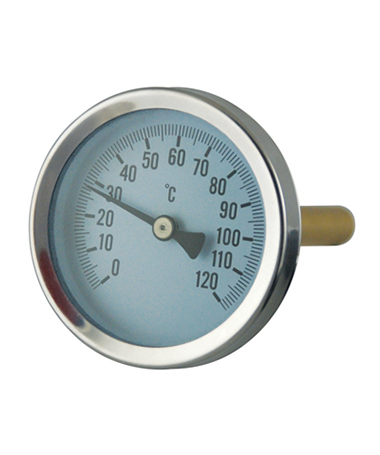
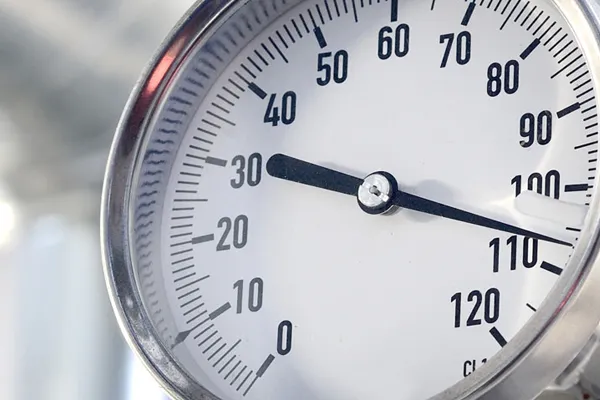
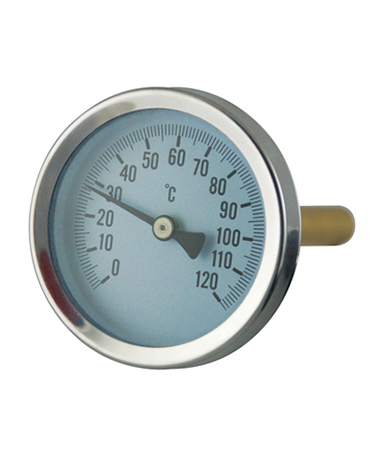
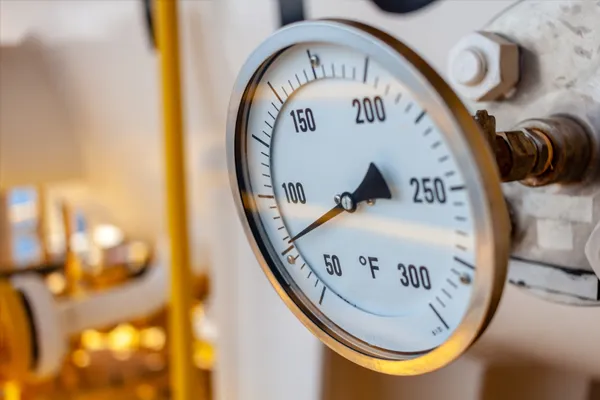
A Bimetal Thermometer is a mechanical temperature measuring device that operates without electricity. It uses two different metals bonded together that expand at different rates when exposed to temperature changes. This differential expansion causes mechanical movement, which is translated into a temperature reading on a dial.
For industries that require dependable temperature measurement in harsh or remote environments, bimetal thermometers provide a practical and durable solution. Unlike electronic sensors, they do not require external power sources and are resistant to electrical interference.
The working principle is based on thermal expansion. Two metals with different coefficients of expansion are bonded together into a strip or coil. When temperature changes:
Most industrial designs use a helical or spiral coil to amplify motion, ensuring accurate and easily readable results.
High-quality manufacturers like Ningbo Rising Instrument Co.,Ltd. All Rights Reserved. use stainless steel casings and precision-calibrated coils to ensure durability and long-term stability.
| Feature | Bimetal Thermometer | Digital Thermometer | Liquid-in-Glass |
|---|---|---|---|
| Power Required | No | Yes | No |
| Durability | High | Moderate | Fragile |
| Cost | Affordable | Higher | Low |
| Industrial Suitability | Excellent | Good | Limited |
Major advantages include:
Pain Point 1: Inaccurate Readings
Solution: Choose models with proper calibration and high-quality bimetal elements. Ensure correct insertion length for accurate heat transfer.
Pain Point 2: Corrosion in Harsh Environments
Solution: Use stainless steel stems and protective thermowells.
Pain Point 3: Vibration Damage
Solution: Opt for vibration-resistant designs or liquid-filled cases.
Pain Point 4: Installation Errors
Solution: Follow manufacturer installation guidelines and ensure proper immersion depth.
In these sectors, reliability and durability are non-negotiable. Companies such as Ningbo Rising Instrument Co.,Ltd. All Rights Reserved. supply thermometers designed for demanding industrial conditions.
Performance depends on:
| Parameter | Bimetal | RTD | Thermocouple |
|---|---|---|---|
| Response Speed | Moderate | Fast | Very Fast |
| Power Supply | Not Required | Required | Required |
| Cost | Low | Medium | Medium |
| Maintenance | Low | Medium | Medium |
Proper installation significantly extends service life and maintains accuracy.
Consider the following:
Working with experienced manufacturers like Ningbo Rising Instrument Co.,Ltd. All Rights Reserved. ensures that custom specifications can be met efficiently.
Ningbo Rising Instrument Co.,Ltd. All Rights Reserved. focuses on delivering durable, accurate, and application-specific temperature measurement solutions tailored to industrial needs.
Q1: How accurate is a Bimetal Thermometer?
Most industrial models provide ±1% to ±2% accuracy of full scale.
Q2: Can it be used in high-pressure systems?
Yes, when installed with a properly rated thermowell.
Q3: Does it require calibration?
Periodic calibration is recommended for critical applications.
Q4: What is the typical lifespan?
With proper installation, it can last many years without significant degradation.
Q5: Is it suitable for outdoor use?
Yes, especially stainless steel models designed for weather resistance.
A Bimetal Thermometer remains one of the most reliable, economical, and durable solutions for industrial temperature measurement. Its mechanical simplicity ensures consistent performance in environments where electronic sensors may fail. By understanding working principles, specifications, and proper installation techniques, businesses can significantly reduce downtime and maintenance costs.
For high-quality, precision-engineered solutions tailored to your industrial needs, trust Ningbo Rising Instrument Co.,Ltd. All Rights Reserved. Our team is ready to provide customized support, technical consultation, and competitive pricing. If you are looking for dependable temperature measurement instruments, contact us today to discuss your project requirements and receive a professional quotation.
Office:1907-1910, Yanxiang Center, No. 1299 Ningchuan Rd., Ningbo, 315042, China
Factory:Huilong Industrial, Qiuga Town, Yinzhou Dist, Ningbo, 315042, China