
News

How are pressure gauge accuracy classes classified?

2026-01-13 0 Leave me a message

The accuracy class of a pressure gauge is a core indicator of its measurement error.  According to national metrological technical specifications, the primary basis for classification is the percentage of the maximum permissible error relative to the measuring range. The smaller the error, the higher the accuracy class.


According to national standards such as GB/T 1226-2010 "General Pressure Gauges," pressure gauge accuracy classes are mainly divided into two categories:


Ordinary Industrial Pressure Gauges

These pressure gauges are suitable for applications where high measurement accuracy is not required. Common accuracy classes include:

Class 2.5: Maximum permissible error is ±2.5% of the measuring range, commonly used in heating, water supply, and general hydraulic systems;

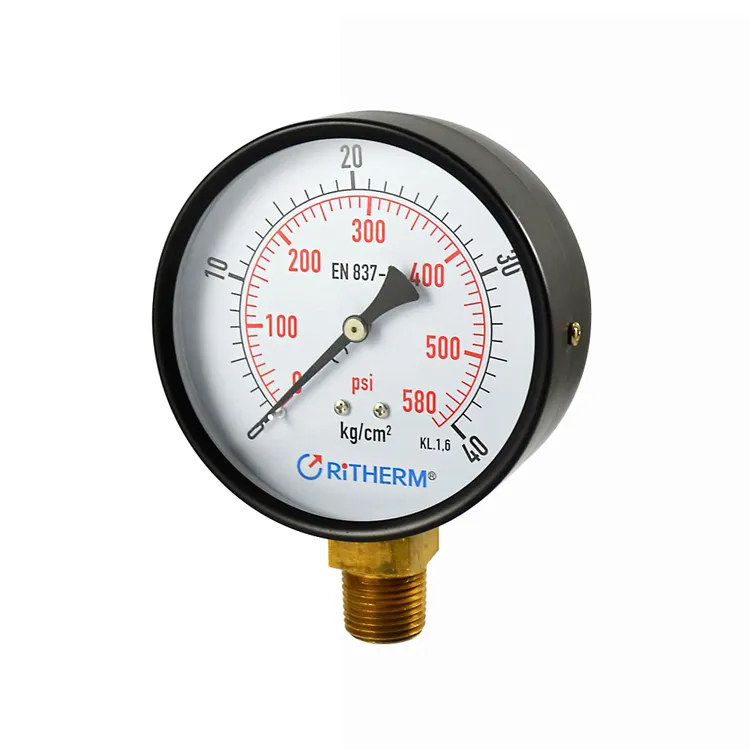
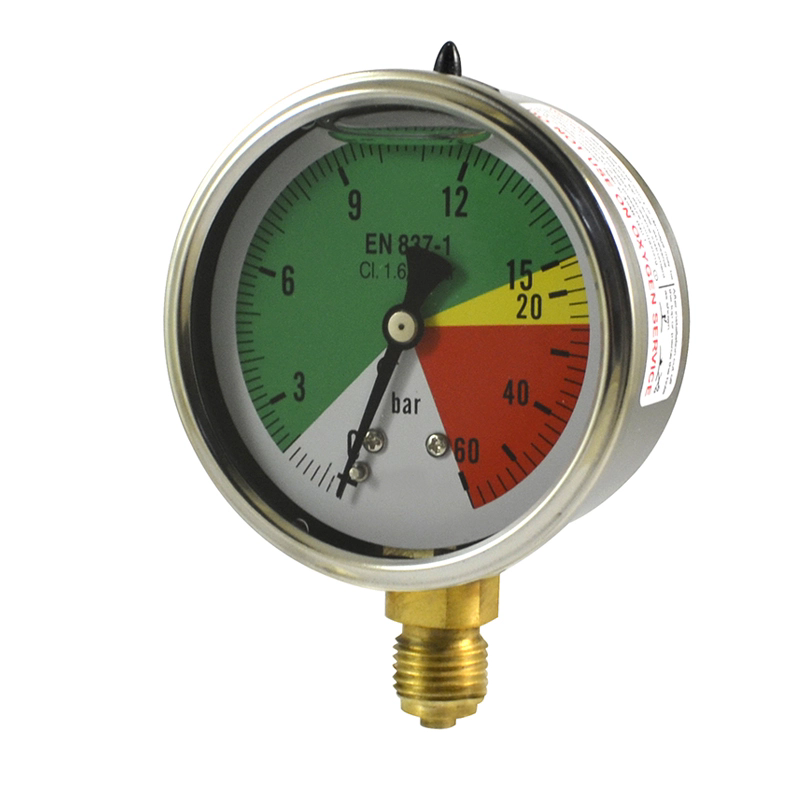
Class 1.6: The most commonly used accuracy class in the industrial field, widely used for routine pressure monitoring in chemical, mechanical, power, and other equipment;

Class 1.0: Slightly higher accuracy, used in industrial processes with stricter pressure control requirements, such as precision hydraulic machine tools and gas transmission pipelines.


Precision Pressure Gauges / Standard Pressure Gauges

These pressure gauges have higher accuracy and can be used as standard instruments for calibrating ordinary pressure gauges, or for scientific research experiments and high-precision process monitoring. Common accuracy classes include:

Class 0.4, Class 0.25: Laboratory or industrial precision measurement applications;

Class 0.16, Class 0.1: Standard pressure gauges used by metrology verification departments for calibrating lower-accuracy pressure gauges;

Class 0.05, Class 0.02: High-precision scientific research experiments, metrological reference instruments, with very few application scenarios.


Related News
Leave me a message
X
We use cookies to offer you a better browsing experience, analyze site traffic and personalize content. By using this site, you agree to our use of cookies. Privacy Policy
Reject Accept