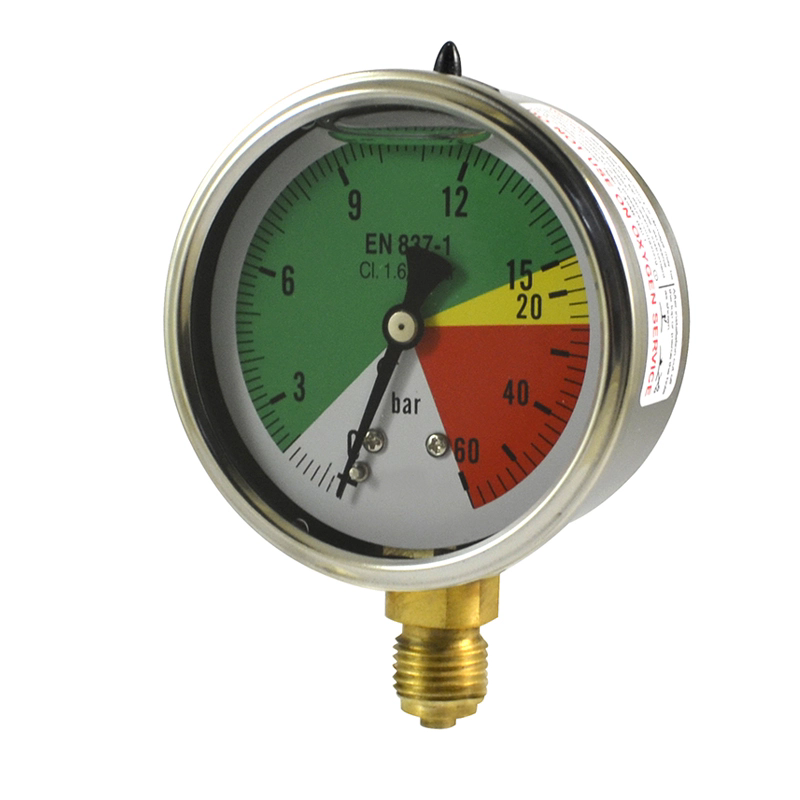
Article Summary
A welding and cutting pressure gauge is a measuring instrument designed to display gas pressure in welding and thermal cutting equipment. Choosing the correct gauge requires attention to gas compatibility, pressure range, accuracy, connection type, material construction, readability, and working conditions. Proper installation, regular inspection, and timely replacement also help maintain measurement reliability and safe operation.
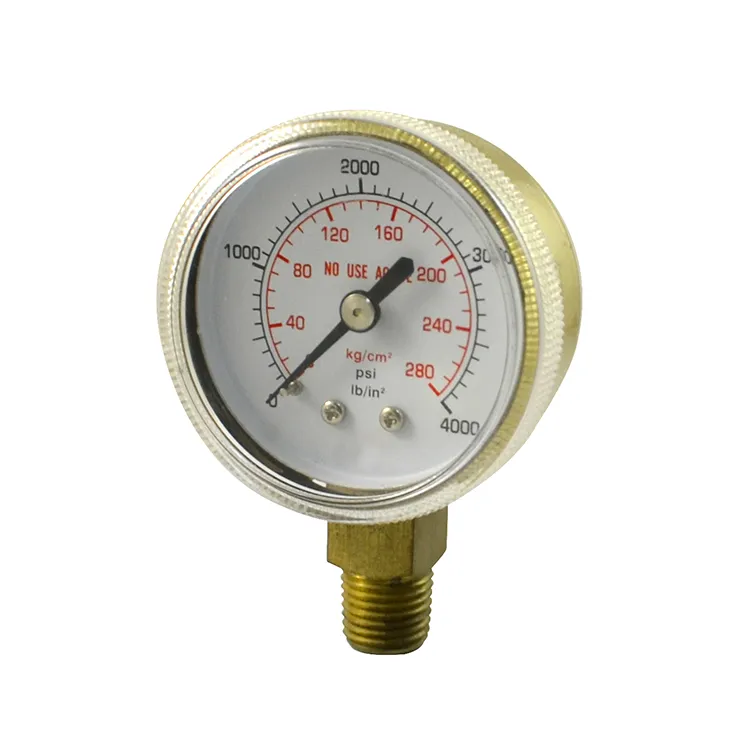
1. What Is a Welding and Cutting Pressure Gauge?
A welding and cutting pressure gauge is an instrument used to measure and display gas pressure in welding and cutting systems. It is commonly installed on gas regulators, cylinders, or other suitable pressure-control equipment to help operators monitor the pressure supplied to the process.
In oxy-fuel applications, different gases serve different functions. Oxygen supports combustion, while fuel gases such as acetylene or propane provide the energy required for heating and cutting. Each gas requires equipment designed and approved for its specific service conditions.
The pressure gauge provides a visible indication of the pressure inside the relevant system. Operators can use this information to check whether the supply is within the equipment manufacturer's specified operating range.
Typical Applications
- Gas welding: Monitoring pressure in oxygen and fuel gas supply systems.
- Oxy-fuel cutting: Checking pressure conditions in cutting equipment.
- Industrial workshops: Supporting gas control in metal fabrication facilities.
- Manufacturing plants: Monitoring gas supply equipment used in production processes.
- Maintenance operations: Helping technicians inspect pressure-regulating equipment.
Although a pressure gauge is a relatively small component, its performance directly affects how clearly operators can observe system pressure. It should therefore be selected as part of the complete gas-control assembly rather than as an isolated accessory.
2. How Does a Welding and Cutting Pressure Gauge Work?
Many conventional welding and cutting pressure gauges use a mechanical sensing element called a Bourdon tube. This design is widely used in industrial pressure measurement because of its straightforward construction and practical operation.
The Working Principle of a Bourdon Tube Gauge
A Bourdon tube is a curved, hollow metal tube that changes shape slightly when internal pressure increases or decreases. One end is connected to the pressure inlet, while the other end is sealed and free to move within a limited range.
When pressurized gas enters the tube, the tube tends to straighten. This movement is transferred through a mechanical linkage and gear mechanism to a pointer. The pointer then moves across a calibrated dial to indicate the measured pressure.
How the Measurement Process Works
- Gas enters the instrument: Pressure is transmitted through the gauge connection into the sensing element.
- The sensing element responds: The Bourdon tube deforms according to the applied pressure.
- Mechanical movement is transferred: Internal components convert the tube movement into pointer rotation.
- The reading is displayed: The pointer indicates pressure on the graduated dial.
Some specialized gauges use other sensing technologies, but the Bourdon tube remains a common mechanical solution for many industrial pressure-measuring applications.
3. Why Is Accurate Pressure Measurement Important?
Pressure measurement plays an important role in maintaining consistent welding and cutting conditions. Incorrect or unreliable readings can make it difficult for operators to identify supply problems and determine whether equipment is functioning as intended.
3.1 Maintaining Stable Operating Conditions
Welding and cutting equipment is designed to operate within specified pressure conditions. A reliable gauge helps operators monitor the pressure indicated by the system and make adjustments using the appropriate regulator.
3.2 Improving Process Consistency
Pressure fluctuations can affect gas delivery and contribute to inconsistent process conditions. Accurate measurement helps technicians identify abnormal readings before they lead to production interruptions or quality problems.
3.3 Supporting Equipment Inspection
A pressure gauge provides useful information during routine equipment checks. Unexpected readings may indicate regulator problems, supply interruptions, leakage, or other faults that require further investigation.
3.4 Supporting Workplace Safety
Gas welding and cutting involve pressurized gases, high temperatures, and potential ignition hazards. A correctly specified and maintained pressure gauge helps operators observe system conditions, but safe operation also depends on proper equipment selection, inspection, training, and compliance with applicable safety procedures.
4. What Types of Pressure Gauges Are Used?
Different welding and cutting applications may require different pressure gauge designs. Understanding the available options helps buyers select an instrument that matches the actual operating environment.
4.1 Standard Mechanical Pressure Gauges
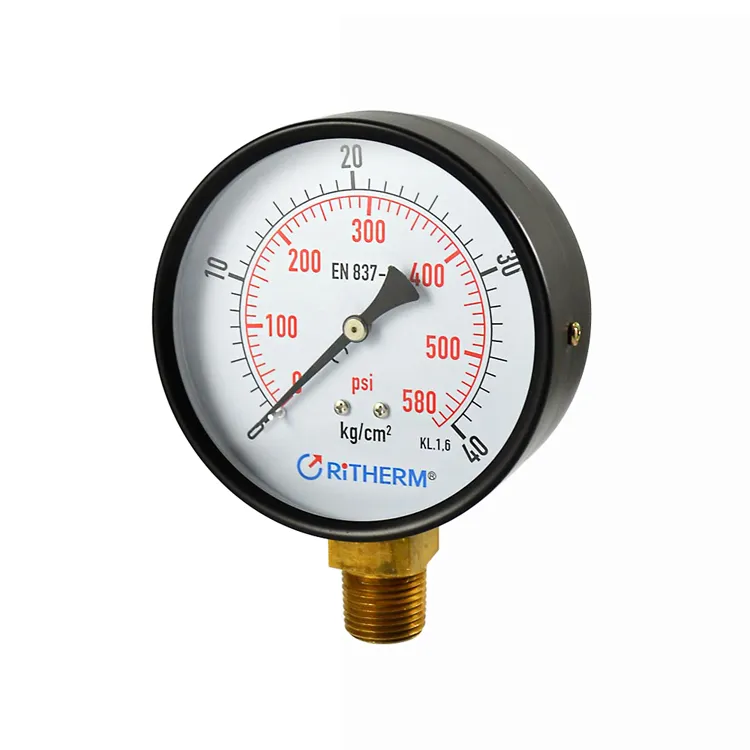
Mechanical gauges use a pressure-sensitive element and pointer mechanism to display readings. They are commonly used in general industrial applications because they do not require an external electrical power supply.
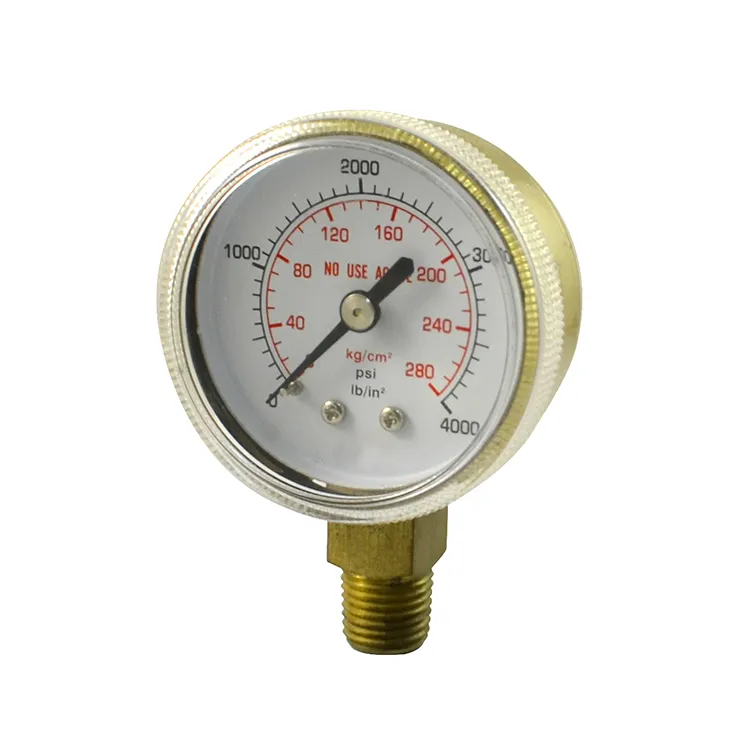
4.2 Oxygen Pressure Gauges
Oxygen service requires specially selected gauges and components that are suitable for oxygen systems. These instruments must meet applicable oxygen-cleanliness and material-compatibility requirements. Oil, grease, and other hydrocarbon contamination must be strictly avoided in oxygen equipment.
4.3 Fuel Gas Pressure Gauges
Fuel gas gauges are designed for use with compatible fuel gas systems. The materials, seals, connections, and pressure ratings must be appropriate for the particular gas and equipment configuration.
4.4 Liquid-Filled Pressure Gauges
Some industrial gauges use liquid filling to reduce pointer vibration and improve readability under mechanical vibration. However, the filling liquid and gauge construction must be suitable for the intended application. Liquid-filled instruments are not automatically appropriate for every welding gas service.
4.5 Digital Pressure Gauges
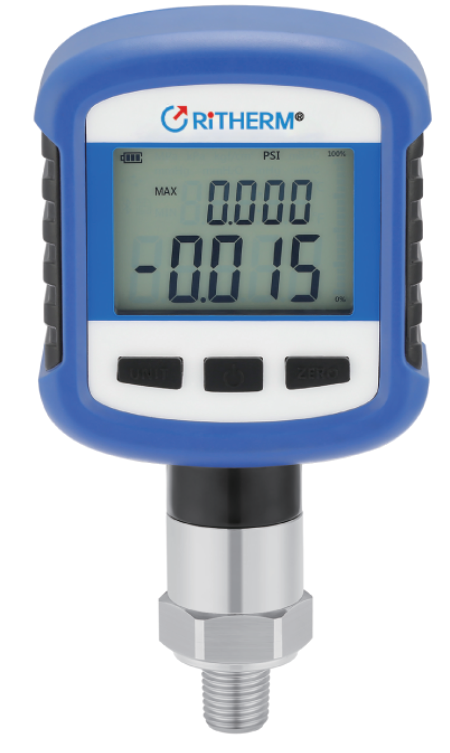
Digital gauges display pressure electronically and may offer additional functions such as selectable units, data recording, or alarm settings. Their suitability depends on the application, power availability, environmental conditions, and required measurement performance.
| Gauge Type | Main Characteristics | Selection Considerations |
|---|---|---|
| Mechanical Gauge | Simple pointer display and no external power requirement | Pressure range, accuracy, and durability |
| Oxygen Gauge | Designed for compatible oxygen service | Oxygen cleanliness and material compatibility |
| Fuel Gas Gauge | Suitable for specified fuel gas applications | Gas compatibility and pressure rating |
| Liquid-Filled Gauge | Can reduce pointer vibration | Filling material and application suitability |
| Digital Gauge | Electronic display and possible additional functions | Power, environmental protection, and accuracy |
5. How Do You Choose the Right Pressure Gauge?
Selecting a suitable welding and cutting pressure gauge requires more than checking its appearance or price. Buyers should evaluate the actual gas, operating pressure, installation configuration, and working environment.
5.1 Identify the Gas Being Measured
Start by identifying whether the gauge will be used for oxygen, acetylene, propane, or another gas. Different gases have different compatibility and safety requirements. Never assume that a general-purpose gauge is suitable for every gas service.
5.2 Select an Appropriate Pressure Range
The measuring range should match the intended application and the manufacturer's recommendations. A gauge with an excessively high range may make normal operating changes difficult to read, while an undersized range may expose the instrument to overpressure.
For many applications, selecting a range that places normal operating pressure within a readable portion of the dial is a useful starting point. The final choice must also account for pressure spikes and applicable equipment specifications.
5.3 Check Measurement Accuracy
Accuracy indicates how closely the displayed reading corresponds to the actual pressure under specified conditions. Buyers should review the accuracy class or manufacturer's stated accuracy specification according to the intended application.
5.4 Confirm Connection Compatibility
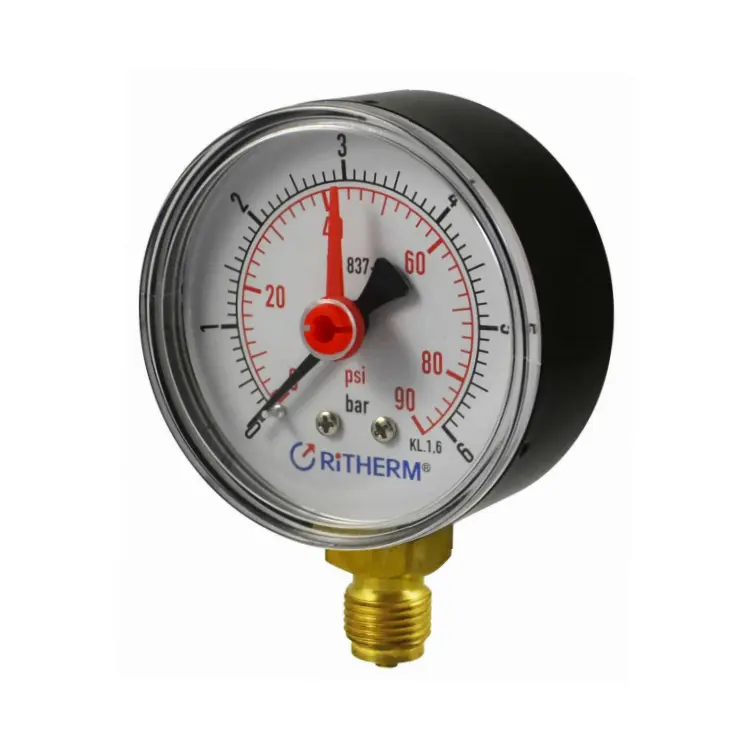
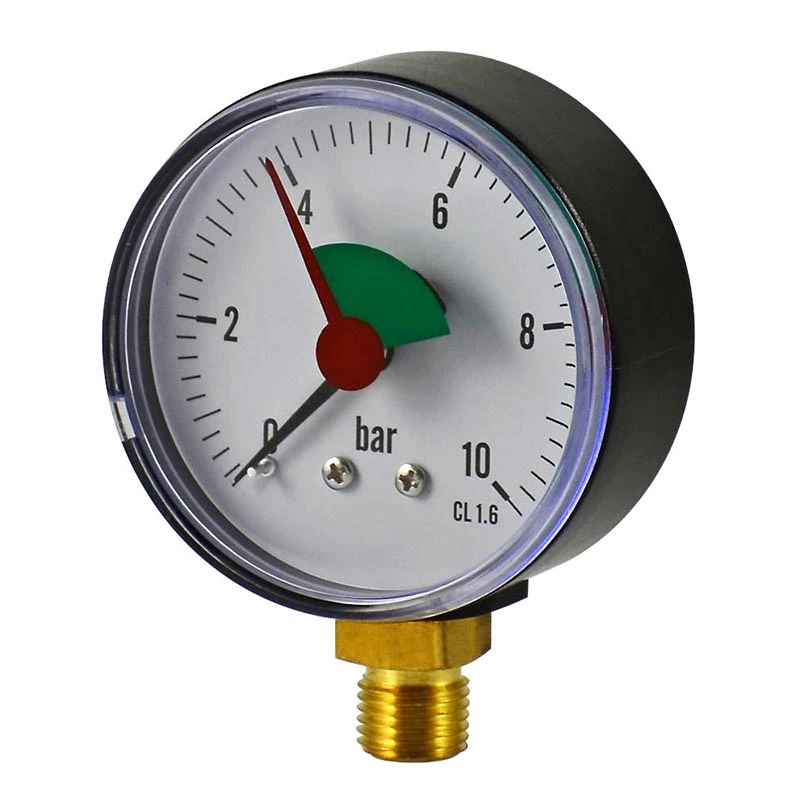
Pressure gauges are available with different connection sizes, thread standards, and mounting arrangements. Common configurations include lower-mounted and back-mounted connections.
Before ordering, confirm the thread type, connection size, mounting orientation, and sealing arrangement. A physically similar connection does not necessarily mean the threads are compatible.
5.5 Consider Environmental Conditions
Workshops and industrial production environments may expose instruments to dust, vibration, moisture, temperature changes, and accidental impacts. The gauge housing, window, sealing structure, and protection rating should be appropriate for the installation environment.
5.6 Evaluate Dial Readability
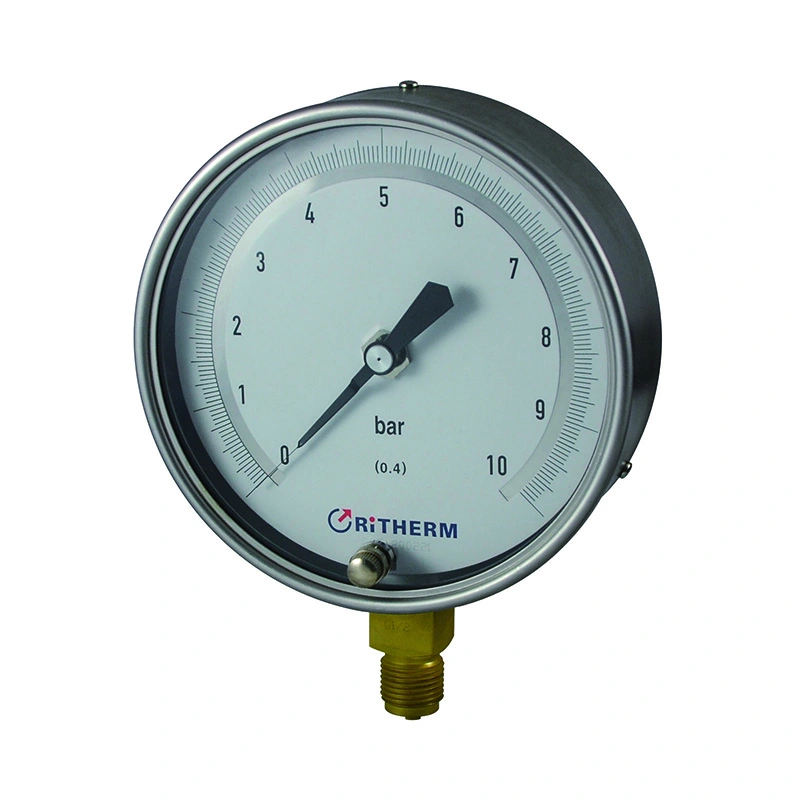
A clearly marked dial allows operators to check readings quickly. Consider dial diameter, scale layout, pointer visibility, unit markings, and viewing distance.
6. Which Technical Specifications Should Buyers Check?
Technical specifications help buyers compare different pressure gauges and confirm whether a product meets their application requirements.
| Specification | What to Check | Why It Matters |
|---|---|---|
| Pressure Range | Specified measuring range and unit | Ensures the gauge matches the intended pressure conditions |
| Accuracy Class | Manufacturer's stated accuracy | Helps evaluate measurement reliability |
| Dial Diameter | Available dial dimensions | Affects reading visibility |
| Connection Thread | Thread type, size, and orientation | Ensures proper equipment compatibility |
| Case Material | Specified housing material | Influences durability and environmental suitability |
| Wetted Materials | Materials in contact with the measured gas | Important for gas compatibility |
| Operating Temperature | Specified temperature limits | Supports reliable operation in the installation environment |
| Applicable Standards | Relevant product and safety requirements | Helps confirm compliance for the target market |
Questions to Send to a Manufacturer
When requesting a quotation, provide enough information for the supplier to recommend a compatible product:
- Which gas will the gauge measure?
- What is the required measuring range?
- Which pressure unit is required?
- What dial diameter is preferred?
- Which connection thread and mounting position are needed?
- Are there specific accuracy or certification requirements?
- What quantity and delivery destination are involved?
7. How Should a Pressure Gauge Be Installed?
Correct installation is essential for reliable readings and safe operation. Because welding and cutting systems involve pressurized gases, installation should only be performed by qualified personnel following the equipment manufacturer's instructions and applicable safety procedures.
Basic Installation Considerations
- Verify the equipment: Confirm that the gauge is specifically suitable for the gas, pressure range, and regulator assembly.
- Inspect the instrument: Check the dial, pointer, connection, housing, and other visible components for damage.
- Confirm thread compatibility: Verify that the gauge connection matches the designated port and sealing method.
- Use approved installation procedures: Follow the manufacturer's requirements for connections and sealing materials.
- Check for leaks safely: Use an approved leak-detection method appropriate for the gas service. Never use an open flame.
- Verify the reading: Compare the indication with the expected system condition using an appropriate reference where necessary.
8. How Do You Maintain a Welding Pressure Gauge?
Regular inspection and appropriate maintenance help extend instrument service life and reduce the possibility of incorrect readings.
Recommended Maintenance Practices
- Visual inspection: Check for damaged windows, corroded cases, loose connections, and abnormal pointer positions.
- Leak inspection: Check the surrounding connections using approved procedures.
- Reading verification: Compare the gauge with a suitable calibrated reference instrument when required.
- Clean handling: Keep instruments clean and prevent contamination, particularly in oxygen service.
- Proper storage: Protect spare gauges from moisture, dust, impact, and extreme temperatures.
- Timely replacement: Replace damaged, unreliable, or unsuitable gauges rather than continuing to use them.
When Should a Gauge Be Recalibrated?
Calibration intervals depend on the application, measurement requirements, operating conditions, and quality management procedures. Some users establish periodic calibration schedules, while others base inspection frequency on risk and equipment history.
If a gauge shows abnormal movement, fails to return to its expected zero position, or differs significantly from a reliable reference instrument, it should be removed from service and evaluated by qualified personnel.
9. What Common Problems Affect Pressure Readings?
Unusual pressure indications can result from instrument damage, system faults, incorrect selection, or environmental conditions. Identifying the possible causes helps maintenance teams decide what needs further inspection.
| Problem | Possible Cause | Recommended Action |
|---|---|---|
| Pointer does not return to zero | Mechanical wear, deformation, or previous overpressure | Remove from service and arrange inspection |
| Pointer fluctuates excessively | Pressure pulsation, vibration, or unstable supply | Inspect the system and gauge suitability |
| Reading appears inaccurate | Calibration drift or damaged sensing element | Compare with a suitable reference instrument |
| Visible leakage | Damaged seals or incompatible connections | Isolate the equipment safely and obtain qualified service |
| Dial is difficult to read | Dirty window, damaged pointer, or poor visibility | Inspect and replace if necessary |
| Gauge repeatedly fails | Incorrect pressure range or unsuitable application | Review the full instrument specification |
Operators should never attempt to repair a faulty gauge while the system is pressurized. The equipment must be isolated and made safe according to the manufacturer's procedures before inspection or replacement.
10. How Can Industrial Buyers Evaluate a Pressure Gauge Supplier?
Choosing a dependable manufacturer is important for distributors, welding equipment wholesalers, industrial suppliers, and OEM buyers. A suitable supplier should provide more than a competitive quotation. Product consistency, technical support, communication, and delivery reliability also influence long-term purchasing performance.
10.1 Review Product Specifications
Ask for detailed technical information, including measuring range, accuracy, connection type, materials, dimensions, and applicable standards. Clear documentation makes it easier to compare products from different manufacturers.
10.2 Confirm Gas Compatibility
For welding and cutting applications, gas compatibility is a critical purchasing consideration. Request confirmation that the proposed gauge is designed and prepared for the specified service, particularly for oxygen applications.
10.3 Evaluate Customization Capabilities
Different markets and equipment manufacturers may require different dial layouts, pressure units, connection threads, dial diameters, or branding. Buyers should check whether the manufacturer can support these requirements and provide clear confirmation before production.
10.4 Check Quality Control Procedures
Ask how incoming materials, assembly processes, finished products, and measurement performance are inspected. Relevant test records and product documentation can help buyers evaluate manufacturing consistency.
10.5 Consider Long-Term Cooperation
For wholesale and OEM purchasing, stable production capacity, reasonable lead times, responsive communication, and consistent product specifications are important factors. A reliable supplier relationship can help reduce procurement uncertainty and support repeat orders.
Ningbo Rising Instrument Co.,Ltd. All Rights Reserved. For industrial buyers evaluating pressure measurement products, clear technical communication and specification confirmation are important steps toward selecting suitable instruments for welding and cutting equipment applications.
11. Frequently Asked Questions
Q1: What is a welding and cutting pressure gauge used for?
A welding and cutting pressure gauge measures and displays gas pressure in compatible welding and cutting equipment. It helps operators monitor supply conditions and identify abnormal pressure indications.
Q2: Can one pressure gauge be used for both oxygen and acetylene?
Not automatically. Oxygen and fuel gas services have different compatibility and safety requirements. Each gauge must be specifically suitable for its intended gas service and approved equipment configuration.
Q3: What is the most common working principle of a welding pressure gauge?
Many mechanical pressure gauges use the Bourdon tube principle. Internal pressure causes the curved tube to deform, and a mechanical linkage transfers this movement to a pointer on the dial.
Q4: How do I select the correct pressure range?
Review the equipment manufacturer's specified operating pressure, expected pressure variations, and the gauge's maximum allowable pressure. Select a range that provides clear readings without exposing the instrument to overpressure.
Q5: What materials are suitable for welding and cutting pressure gauges?
Material selection depends on the measured gas, pressure, temperature, and construction requirements. Buyers should confirm the compatibility of all gas-contacting components with the intended service rather than relying on case material alone.
Q6: How often should a welding pressure gauge be calibrated?
There is no single interval suitable for every application. Calibration frequency should be determined by the equipment manufacturer's guidance, operating conditions, measurement requirements, and the user's quality procedures.
Q7: Why does a pressure gauge pointer fluctuate?
Fluctuation may be caused by pressure pulsation, vibration, unstable gas supply, or a damaged gauge. The complete system should be inspected to identify the source of the problem.
Q8: Are digital pressure gauges better than mechanical gauges?
Not necessarily. Digital gauges may provide additional functions and convenient readings, while mechanical gauges offer simple operation without external power. The best option depends on the application and operating environment.
Q9: What information should I provide when requesting a quotation?
Provide the gas type, pressure range, accuracy requirement, dial diameter, connection thread, mounting orientation, quantity, destination market, and any special documentation or customization requirements.
Q10: When should a welding and cutting pressure gauge be replaced?
Replace a gauge if it is damaged, leaks, gives unreliable readings, has a defective pointer, or no longer meets the required measurement specifications. Suspect instruments should be removed from service until properly evaluated.
Conclusion
A suitable welding and cutting pressure gauge is an important part of a reliable gas pressure monitoring system. Selecting the right instrument involves understanding gas compatibility, measuring range, accuracy, connection specifications, materials, and working conditions.
Beyond product selection, proper installation, regular inspection, and appropriate calibration procedures help maintain measurement reliability throughout the instrument's service life. Industrial buyers should also evaluate supplier technical support, product documentation, and quality control capabilities before placing an order.
Whether you are sourcing gauges for welding equipment manufacturing, industrial distribution, or wholesale supply, taking the time to confirm technical requirements can help prevent compatibility issues and improve purchasing confidence.
Looking for a Reliable Pressure Gauge Supplier?
Choosing the right pressure measurement instrument starts with understanding your application. If you are sourcing welding and cutting pressure gauges for industrial use, wholesale distribution, or OEM projects, Ningbo Rising Instrument Co.,Ltd. welcomes your product inquiries.
Contact us with your required pressure range, gas type, connection specifications, and purchasing quantity. Our team can help you discuss suitable product configurations and technical requirements.
Contact Us